As the wave of artificial intelligence sweeps across the globe, and China transitions from a "follower" to a "front-runner," we cannot help but ask: what force continues to infuse soul and momentum into this land of innovation? The Chinese Association for Artificial Intelligence (CAAI) provides the answer with a fifteen-year report card — the Wu Wenjun AI Science & Technology Award stands as a defining benchmark for the heights achieved in the era of intelligent technology.
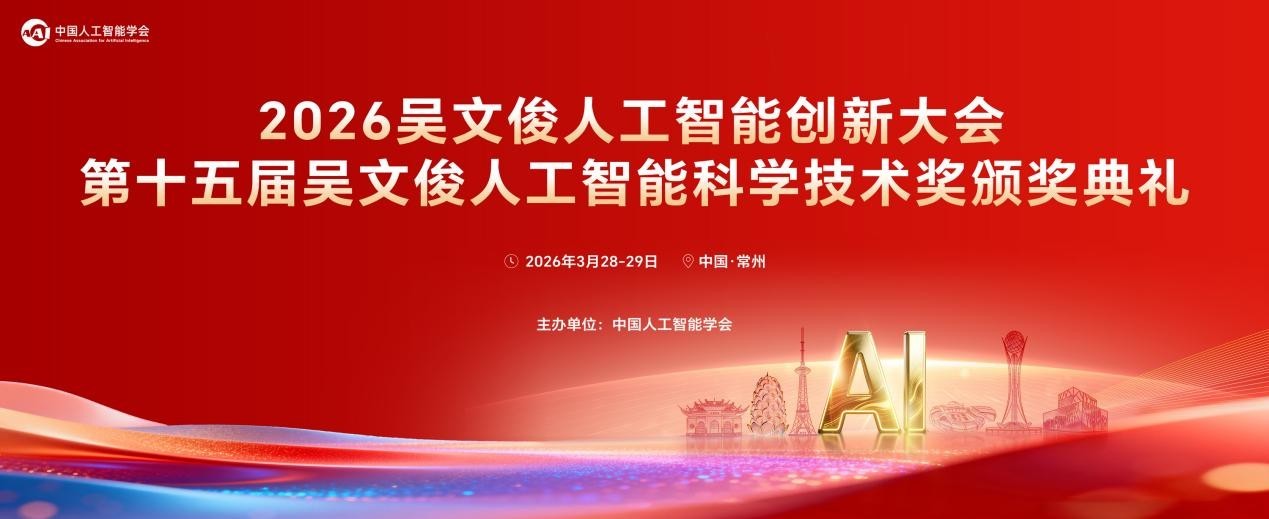
On March 28–29, the 2026 Wu Wenjun AI Innovation Conference and the 15th Wu Wenjun AI Science & Technology Award Ceremony will be held in Changzhou. Once again, a group of outstanding researchers will take the stage to receive this highest honor in the field of AI science and technology in China.
Why has this award consistently influenced China's AI technology landscape for fifteen years? The answer lies in the legacy of Academician Wu Wenjun's spirit, the CAAI's mission-driven commitment and professional dedication, and the era-defining height and innovative value embodied in each trophy.
Source of Spirit: Naming after a Master, Establishing the Cornerstone of Innovation
The Wu Wenjun AI Science & Technology Award was born out of tribute to a scientific giant, and from aspirations for the advancement of AI in China. Named after Academician Wu Wenjun — a people's scientist, a pioneer of AI, and a trailblazer and leader in China's intelligent science research — the award is rooted in the solid foundation and enduring spirit he established for the field. As the inaugural recipient of China's State Preeminent Science and Technology Award, Academician Wu Wenjun's "Wu Class" and "Wu Formula" in topology are classic achievements in international algebraic topology. Moreover, at the dawn of the computer age, he pioneered research in mathematical mechanization with visionary foresight, establishing the "Wu Method," which laid the theoretical groundwork for key branches of AI, such as automated reasoning and intelligent decision-making. Academician Wu's research spirit — daring to venture into "uncharted territory" and pursuing lifelong exploration — became the core motivation for establishing the Wu Wenjun Award and set the tone for fifteen years of development: steadfast innovation and the relentless pursuit of excellence.
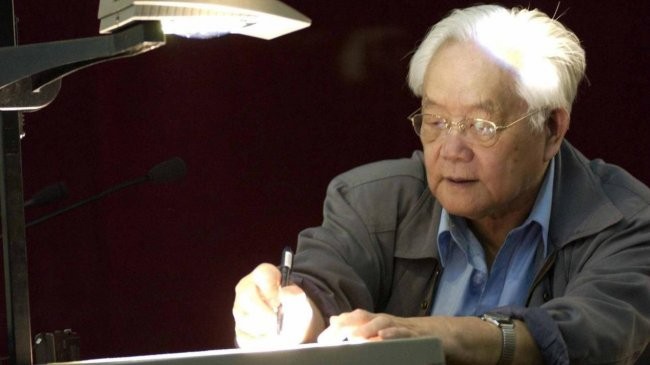
Image source Internet
Core of Development: Steered by the CAAI, Forging an Industry Benchmark
As a core academic organization in China's AI field, the Chinese Association for Artificial Intelligence (CAAI), leveraging its profound industry expertise and precise grasp of technological trends, endowed the Wu Wenjun AI Science & Technology Award from its inception with a high starting point, high standards, and significant influence. The CAAI serves as both the sole host and the evaluation body for the award, and has established a rigorous, scientific, and impartial review system.
For fifteen years, the CAAI has consistently upheld the principles of fairness, impartiality, and transparency, refining the award system and standardizing the selection process, ensuring that the Wu Wenjun Award has maintained its authority and influence as the "highest award in AI science and technology in China." Committed to advancing intelligent science and technology, the CAAI has shaped the award into a central platform for recognizing outstanding achievements in AI and motivating researchers to innovate. It has witnessed and driven China's transformative journey in AI technology from following and running alongside global leaders, to achieving leading positions in certain fields.
Quality of Outcomes: Hard-Nosed Innovation Demonstrates China's AI Prowess
Fifteen years of dedication have yielded remarkable results. The winning achievements of this year's Wu Wenjun Award vividly demonstrate the innovative heights and application depth of China's AI sector. The award ceremony will present awards across multiple categories, honoring a total of 116 projects and individuals, covering the entire spectrum from fundamental theoretical research and key technological breakthroughs to industrial applications and the cultivation of young talent.
The Science and Technology Contribution Award, an important category recognizing academic leaders in AI, is conferred this year upon professors Sun Fuchun and Song Yongduan. Professor Sun Fuchun has dedicated his research to embodied intelligence and multimodal perception in robotics, proposing the integrated "know-act-body" theoretical framework for embodied intelligence. He also developed China's first multi-degree-of-freedom tactile dexterous hand, with related achievements widely applied in national strategic scenarios. Professor Song Yongduan has made outstanding contributions in intelligent control of complex systems and neural network adaptive control, innovatively proposing core theories such as the time-varying ideal weight neural network structure, significantly enriching the theoretical framework for intelligent control.
The Grand Prize of the Science and Technology Progress Award is awarded to the achievement "Key Technologies and Applications for Deep Natural Language Understanding and Generation." Led by Harbin Institute of Technology (Shenzhen) in collaboration with several other institutions, this project proposed a new paradigm for language-native AI centered around language. The team independently developed the "LiZhi" Uni-MoE multimodal mixture-of-experts large model, overcoming numerous challenges in intelligent modeling and establishing a benchmark for the independent controllability and industrial deployment of large model technology in China.
Achievements in the Natural Science Award category, such as "Theory of Spatial-Temporal-Spectral Visual Structure Perception and Robust Learning" and "Theory and Methods of Representation Learning for Intelligent Drug Discovery," have laid a solid theoretical foundation for long-term industry development. Achievements in the Technology Invention Award category, such as "Key Technologies and Applications of Universal Controllers for Integrated Sensing, Computing, and Actuation Robots" and "Key Technologies and Applications for Multi-Constraint Intelligent Perception and Control of Spacecraft in Complex Environments," have addressed critical bottlenecks in relevant industries. Achievements in the Science and Technology Progress Award category, such as "Key Technologies and Applications for Intelligent Processing of Spaceborne Remote Sensing Imagery" and "Key Technologies and Applications for Multimodal Intelligent Diagnosis of Major Diseases," have deeply empowered sectors like aerospace, healthcare, and the economy. The 15 recipients of the Youth Science and Technology Award represent the emerging force in China's AI field, highlighting the success in cultivating a robust talent pipeline.
Standing at this new starting point after fifteen years, the Wu Wenjun AI Science & Technology Award will carry forward the innovative spirit of Academician Wu Wenjun, remain firmly focused on national strategies, deepen fundamental research, tackle core technologies, nurture young talent, and help bring more scientific and technological innovations to fruition.
© OfficialAffairs
