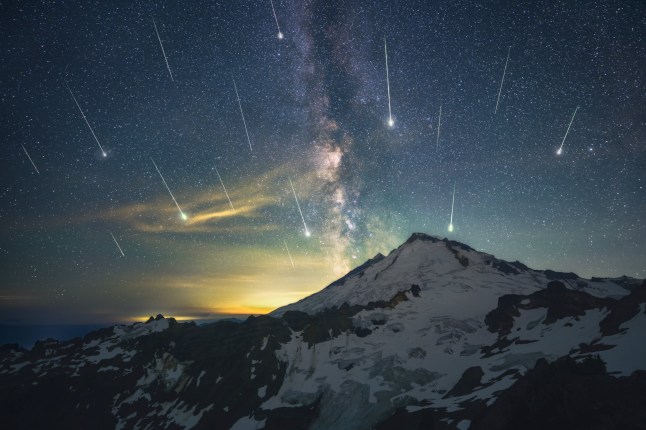
The Draconid meteor shower isn’t as active as others like the Perseid meteor shower (pictured),but it’s still worth watching! (Picture: Getty Images)
Stargazers have been treated to a series of celestial shows this year,from full moons to solar eclipses – and an upcoming meteor shower is expected to be the latest.
The Draconid meteor shower is set to peak tonight,as the Earth travels through a cloud of debris left behind by a comet.
The meteor shower is sometimes known as the Giacobinids,named after Michel Giacobini,who discovered the comet 21 P/Giacobini-Zinner from which the meteors come.
Although the Draconids – thought to be named so as they point to the Draco constellation – aren’t as active as other meteor showers,they can still put on a gorgeous display.
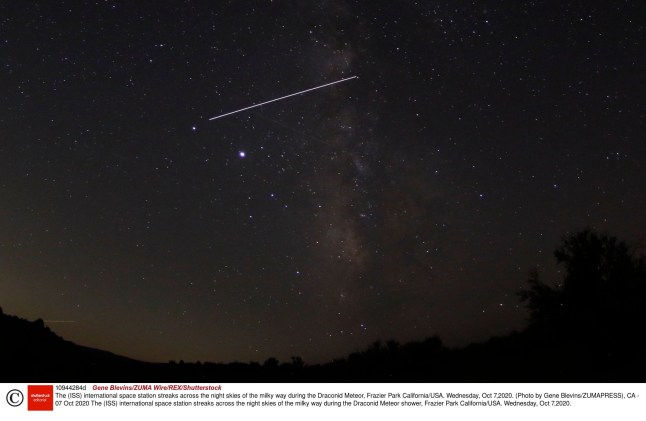
Are you going to be looking to the skies tonight? (Picture: Gene Blevins/ZUMA Wire/REX/Shutterstock)
Although the Draconids meteor shower is active between October 6 and October 10,it is set to reach its peak today,October 9,during which an estimated maximum of 10 meteors can be seen per hour,according to the Royal Museum Greenwich.
While many other meteor showers are best seen in the early hours of the day,the Draconids are best seen in the evening,usually after nightfall.
So,from around 7pm tonight,you should be able to catch the Draconid meteors racing across the sky – and you won’t have to stay up too late to view them!
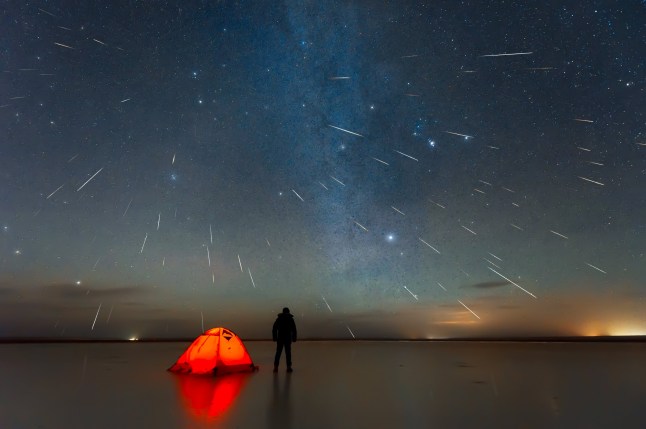
Like other showers,such as the Gemini meteors (pictured),you’ll need to go somewhere dark with a clear view of the sky to view the Draconids (Picture: Getty Images)
The above comes with a caveat: the weather,mostly,as you’ll want a clear sky to be able to see the Draconids in all of their glory. Unfortunately for us,it isn’t looking too good this year.
The Met Office has predicted rain for today,but suggests that showers will eventually make way for ‘sunshine and blustery showers’.
Their weather forecast map shows that most of the south of England will have clear skies,while the southwest and parts of Scotland face light showers from 7pm.
Rain will reduce visibility and make it difficult to see the meteor shower,but with light rainfall forecast,you may still catch a glimpse of the meteor shower.
Royal Museums Greenwich suggests you find a spot where skies are dark and encourages you to make sure there are ‘no direct sources of light in your eyes’ to adapt to local conditions and ‘ensure fainter meteors become visible’.
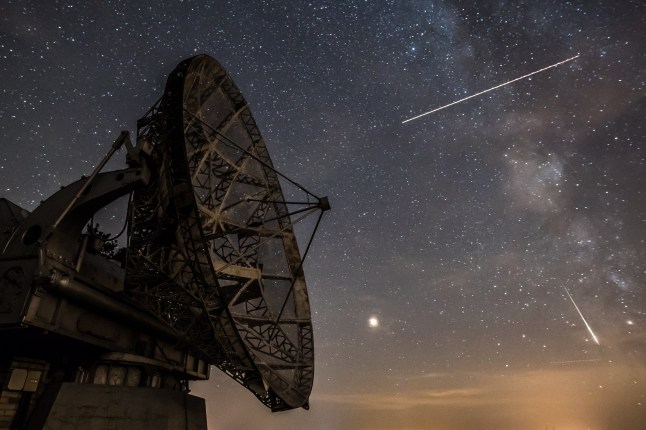
There are lots of other meteor showers you can view this year,so don’t worry if you miss the Draconids! (Credits: EPA)
Yep! If you miss the Draconids – whether due to timing or poor visibility – there are several other meteor showers happening throughout the last few months of the year.
These include:
Orionids: Active October 2 to November 7
Taurids: Active September 10 to November 20 (Southern) and October 20 to December 10 (Northern)
Leonids: Active November 6 to 30
Geminids: Active December 4 to 20
Ursids: Active December 17 to 26
If that’s not enough,there are also several full moons to look forward to,including:
Hunter’s Moon: October 26
Beaver Moon: November 24
Cold Moon: December 24
Get in touch with our news team by emailing us at .
For more stories like this,check our news page.
© OfficialAffairs
